Overview and symbolism
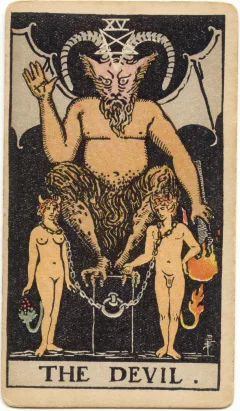
Two figures stand beneath a large central figure, with loose chains drawing attention to the connection between them. The dark background makes attachment the visual focus. The Devil is read here as a metaphor for habits and patterns that can feel compelling. Approach the pattern with curiosity about the need it serves, the cost it carries, and the choices available around it.
Keywords
- Upright: attachment, habits.
- Reversed: release, awareness.
Upright meaning
Attachment becomes worth examining when an immediate reward repeatedly conflicts with a value you care about. This might be checking for approval, repeating an argument, or staying constantly available to avoid disappointing someone. Describe the pattern without calling yourself weak. Understanding what it offers in the moment can help you see why it is difficult to change.
Reversed meaning
Release and awareness shift attention toward the space available around a habit. Recognizing a pattern is not the same as resolving it, but it can make a different response imaginable. Look for a small interruption, an honest conversation, or practical support. Avoid turning the reversal into another demand that you should be able to change everything alone.
Love
Notice where connection becomes possession, pressure, or a constant need for reassurance. Strong attraction does not cancel boundaries. Discuss behavior that affects your freedom or comfort, and seek trusted support if the situation is difficult to assess from inside it.
Career
Approval seeking or constant checking can make work feel narrower than it is. Identify the expectation that keeps pulling your attention and ask whether it is explicit or assumed. A clearer availability agreement may be more useful than trying to prove commitment through endless responsiveness.
Advice
Describe a repeated loop: trigger, action, immediate reward, and later cost. Choose one point where you can introduce a pause or request support. The aim is greater awareness and choice, not punishment or a dramatic test of willpower.
Yes or No
- Upright — No: attachment, habits.
- Reversed — Maybe: release, awareness.
This guide uses a fixed mapping for each orientation. Compare the listed themes with your question: where do they describe a practical opening, an obstacle, or missing information? Write down the observation that best supports your interpretation, along with any detail you still need to check.
Related spreads
Try a daily one-card reading with this prompt: "What keeps this pattern appealing, and where is one point of choice?" Write an observation from your day beside the card's theme, then choose one small action if it feels useful.
A three-card reading can add context through past, present, and future positions. Use the future position to explore how different choices could develop from your current circumstances. For a more layered question, try the Celtic Cross to compare influences and perspectives. With the Yes or No spread, start with a focused question, then compare the fixed tendency above with your own observations.
FAQ
Does The Devil mean I am a bad person?
No. The card concerns attachment and habits, not a verdict on character. Read it as an opportunity to examine a pattern with honesty and compassion, while respecting the limits of a symbolic exercise.
What does The Devil reversed mean?
The reversed themes are release, awareness. Use them to examine the situation from another angle. A reversal can highlight a difficulty, an adjustment, or a constructive response. Choose the interpretation that fits your observations and the position in the spread.
What question can I ask with The Devil?
Ask: "What keeps this pattern appealing, and where is one point of choice?" Keep the answer connected to your own observations and choices. If the interpretation does not fit, you can set it aside rather than forcing your experience to match the card.
This AI-assisted interpretation is for entertainment only and does not predict the future. It is not medical, legal, or investment advice.