Overview and symbolism
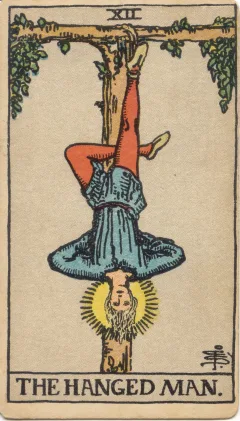
A figure hangs upside down from a wooden frame with one leg bent and a calm expression. The unusual viewpoint matters more here than the physical arrangement. The Hanged Man explores a pause that changes how an issue is seen. It offers a metaphor for loosening an established interpretation long enough to notice an option that urgency has obscured.
Keywords
- Upright: pause, perspective.
- Reversed: stalling, resistance.
Upright meaning
A useful pause has a purpose. You might let a conversation settle, observe a process before changing it, or ask how the situation looks to someone with different responsibilities. Perspective grows when you suspend the demand to defend your first answer. Waiting can be active if it includes attention and a clear reason for not acting yet.
Reversed meaning
Stalling and resistance appear when the pause no longer produces understanding. You may be collecting more opinions while avoiding a manageable choice, or treating discomfort as evidence that no action is possible. Ask what information is actually missing. If you already have enough for a small step, name the reluctance rather than hiding it behind indefinite preparation.
Love
Try describing the disagreement from the other person's viewpoint before composing your response. Understanding their account does not require giving up your own needs. A pause is most considerate when its purpose and expected duration are communicated instead of leaving someone guessing.
Career
A delayed project can become a useful review point if you examine assumptions and dependencies. Identify what can be learned while waiting and what requires an explicit decision. Avoid making endless analysis look productive when the actual obstacle is an unresolved responsibility.
Advice
Set a question for your pause and decide when to revisit it. Write down one assumption you are willing to reconsider. At the review point, choose whether the new perspective supports action, further information, or a clearly explained change of plan.
Yes or No
- Upright — Maybe: pause, perspective.
- Reversed — No: stalling, resistance.
This guide uses a fixed mapping for each orientation. Compare the listed themes with your question: where do they describe a practical opening, an obstacle, or missing information? Write down the observation that best supports your interpretation, along with any detail you still need to check.
Related spreads
Try a daily one-card reading with this prompt: "What changes when I stop defending my first interpretation?" Write an observation from your day beside the card's theme, then choose one small action if it feels useful.
A three-card reading can add context through past, present, and future positions. Use the future position to explore how different choices could develop from your current circumstances. For a more layered question, try the Celtic Cross to compare influences and perspectives. With the Yes or No spread, start with a focused question, then compare the fixed tendency above with your own observations.
FAQ
Does The Hanged Man tell me to sacrifice my needs?
No. Its pause and perspective themes invite reconsideration, not self-erasure. A helpful adjustment should remain compatible with your boundaries and practical responsibilities.
What does The Hanged Man reversed mean?
The reversed themes are stalling, resistance. Use them to examine the situation from another angle. A reversal can highlight a difficulty, an adjustment, or a constructive response. Choose the interpretation that fits your observations and the position in the spread.
What question can I ask with The Hanged Man?
Ask: "What changes when I stop defending my first interpretation?" Keep the answer connected to your own observations and choices. If the interpretation does not fit, you can set it aside rather than forcing your experience to match the card.
This AI-assisted interpretation is for entertainment only and does not predict the future. It is not medical, legal, or investment advice.