Overview and symbolism
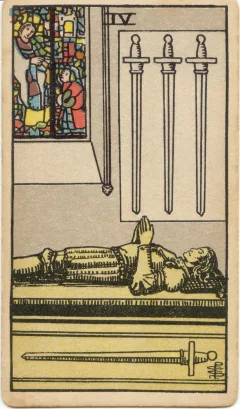
A reclining figure rests beneath three swords, with a fourth placed horizontally below. The stillness of the composition separates it from scenes of active conflict. The Four of Swords explores rest and contemplation. It asks what can be understood when you temporarily stop responding and how to give that pause a practical place within ordinary responsibilities.
Keywords
- Upright: rest, contemplation.
- Reversed: restlessness, exhaustion.
Upright meaning
Rest can involve stepping away from a difficult thread, reducing unnecessary input, or allowing a quiet interval before another decision. Contemplation is more useful when attention is not continually pulled back into the same exchange. A defined pause can make room to sort what matters, while a simple message about availability helps others understand the boundary.
Reversed meaning
Restlessness and exhaustion may coexist when you need a break but keep returning to unfinished thoughts. Notice what makes stopping difficult: an unclear expectation, fear of falling behind, or a task without a defined endpoint. Try separating a necessary task from the extra checking around it, then choose a realistic stopping point and communicate when you will return.
Love
A break from an argument can support a later conversation if both people know that the topic will be revisited. Explain the purpose of the pause and suggest a time to reconnect. Silence used as punishment is different from a clearly communicated need for quiet.
Career
Protect a period without meetings or messages when careful review is needed. Rest may also mean closing a task at a reasonable stopping point rather than carrying it through every interval. If demands repeatedly prevent pauses, discuss workload and expectations through the appropriate channel.
Advice
Choose a short, realistic interval for stepping away from input. Before it begins, note the next action so you do not need to keep rehearsing it. If ongoing sleep or emotional difficulties affect daily life, consult a qualified professional and describe the changes you have noticed in your routines and feelings.
Yes or No
- Upright — Maybe: rest, contemplation.
- Reversed — No: restlessness, exhaustion.
This guide uses a fixed mapping for each orientation. Compare the listed themes with your question: where do they describe a practical opening, an obstacle, or missing information? Write down the observation that best supports your interpretation, along with any detail you still need to check.
Related spreads
Try a daily one-card reading with this prompt: "What kind of pause would let me return with clearer attention?" Write an observation from your day beside the card's theme, then choose one small action if it feels useful.
A three-card reading can add context through past, present, and future positions. Use the future position to explore how different choices could develop from your current circumstances. For a more layered question, try the Celtic Cross to compare influences and perspectives. With the Yes or No spread, start with a focused question, then compare the fixed tendency above with your own observations.
FAQ
Is the Four of Swords a medical instruction to rest?
No. It offers a symbolic prompt about ordinary pauses and reflection, not a diagnosis or treatment plan. Health concerns should be discussed with a qualified healthcare professional.
What does Four of Swords reversed mean?
The reversed themes are restlessness, exhaustion. Use them to examine the situation from another angle. A reversal can highlight a difficulty, an adjustment, or a constructive response. Choose the interpretation that fits your observations and the position in the spread.
What question can I ask with Four of Swords?
Ask: "What kind of pause would let me return with clearer attention?" Keep the answer connected to your own observations and choices. If the interpretation does not fit, you can set it aside rather than forcing your experience to match the card.
This AI-assisted interpretation is for entertainment only and does not predict the future. It is not medical, legal, or investment advice.